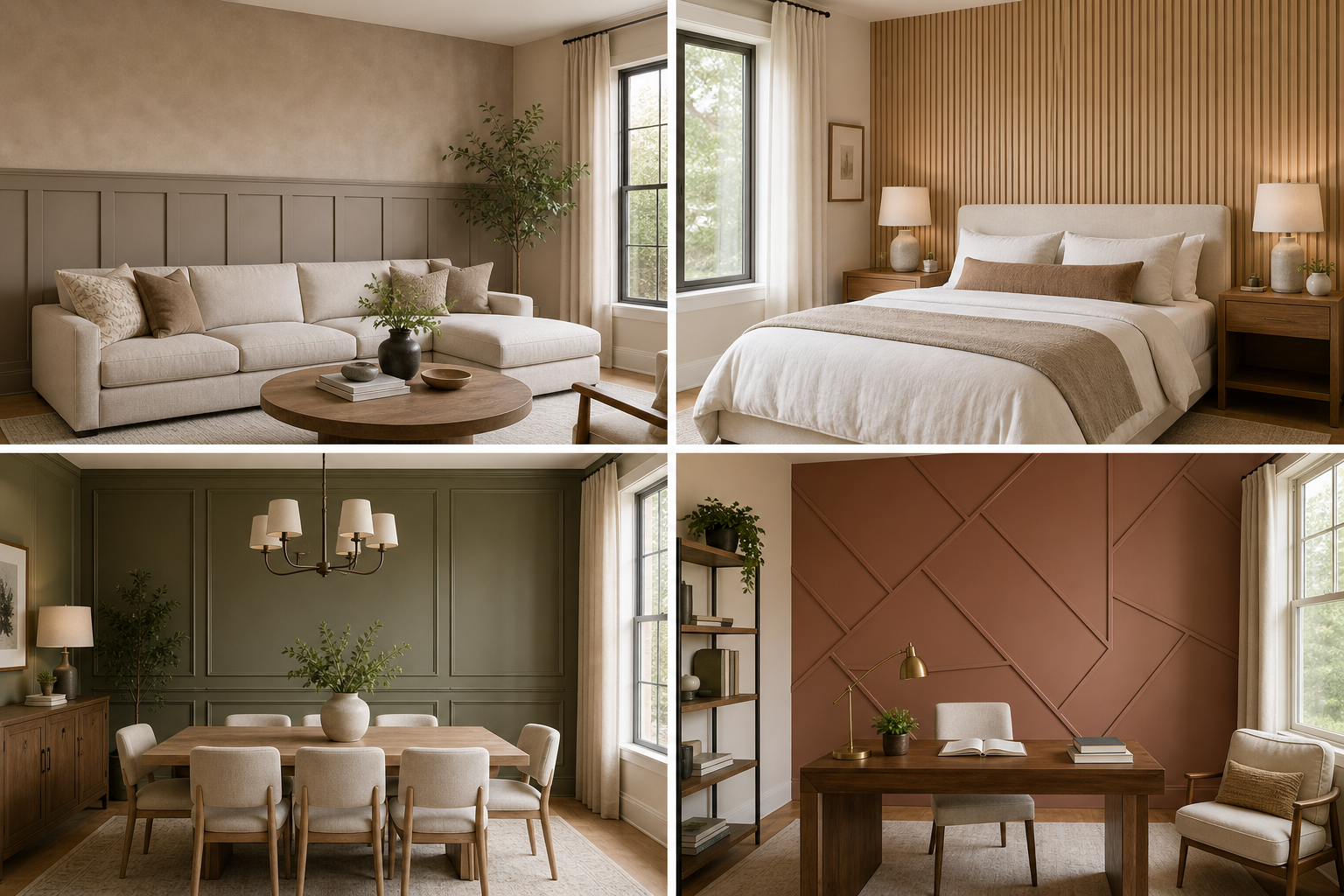
An accent wall can add color, texture, architectural character, or a clear focal point to almost any room. The right design depends on the room’s purpose, dimensions, lighting, furniture, and existing finishes.
This guide compares popular accent-wall styles and explains where each one works best. Explore our custom accent wall services in Atlanta for additional design and material options.
This guide compares popular accent-wall styles and explains where each one works best. Explore our custom accent wall services in Atlanta for additional design and material options.
Popular Types of Accent Walls
Board and Batten
Applied trim creates framed sections across the wall. Traditional layouts use evenly spaced panels, while modern versions may combine different proportions or asymmetrical patterns.
Best for: living rooms, bedrooms, dining rooms, entryways, staircases and home offices.
Best for: living rooms, bedrooms, dining rooms, entryways, staircases and home offices.
Geometric Trim
Vertical, horizontal, or diagonal trim pieces form a custom pattern. The wall and trim are usually painted the same color so shadows reveal the design.
Best for: living rooms, offices, bedrooms, game rooms and compact feature walls.
Best for: living rooms, offices, bedrooms, game rooms and compact feature walls.
Picture-Frame Molding
Thin molding creates a refined series of rectangular panels. It works especially well in traditional and transitional interiors.
Best for: dining rooms, formal living rooms, bedrooms, hallways and staircases.
Best for: dining rooms, formal living rooms, bedrooms, hallways and staircases.
Wood Slat Walls
Vertical wood slats add warmth, texture, and a contemporary architectural rhythm. Slats can cover the entire wall or highlight selected areas.
Best for: living rooms, media rooms, home offices, bedrooms and entryways.
Best for: living rooms, media rooms, home offices, bedrooms and entryways.
Shiplap
Horizontal or vertical boards introduce clean lines and visible texture. Shiplap can feel modern, transitional, coastal, or farmhouse depending on its color and application.
Best for: living rooms, bedrooms, dining areas, entryways and fireplace walls.
Best for: living rooms, bedrooms, dining areas, entryways and fireplace walls.
Limewash and Decorative Finishes
Hand-applied finishes create soft color movement and organic texture without adding physical trim.
Best for: living rooms, bedrooms, dining rooms, offices and powder rooms.
Best for: living rooms, bedrooms, dining rooms, offices and powder rooms.
Painted Color Accent Walls
A carefully selected paint color provides the simplest visual transformation. It can also serve as the background for artwork, furniture, shelving, or a future trim installation.
Best for: bedrooms, offices, children’s rooms and compact spaces.
Best for: bedrooms, offices, children’s rooms and compact spaces.
Quick Room-by-Room Guide
Accent Walls for Living Rooms
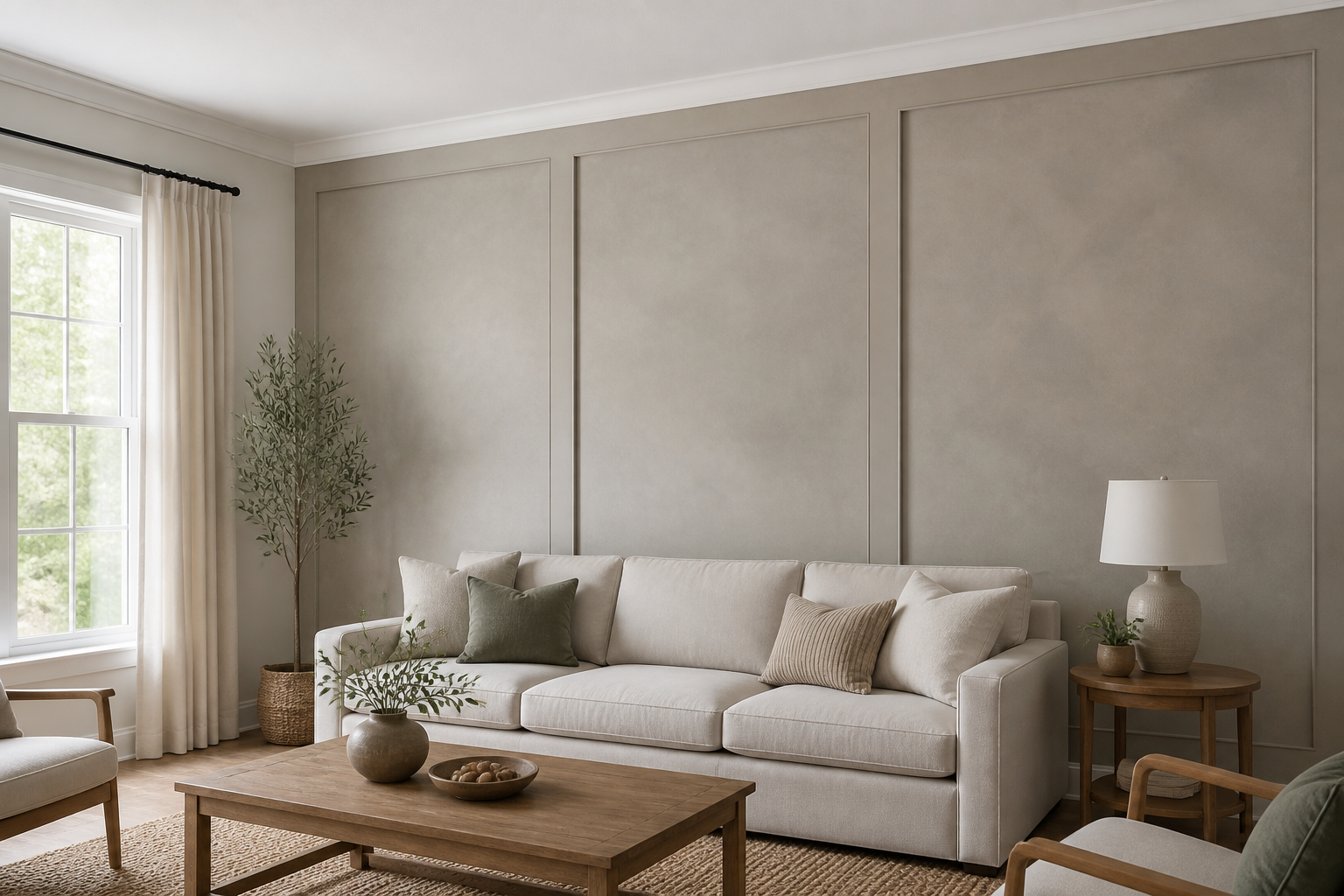
The living room usually offers the greatest number of design possibilities because it contains larger walls and is viewed from multiple angles.
The best wall is often located behind the television, sofa, fireplace, or main seating area. Large rooms can support wider board and batten panels, full-height wood slats, or a strong limewash finish.
The pattern should be large enough to match the scale of the room. Too many small trim sections can make a wide living-room wall appear busy.
The best wall is often located behind the television, sofa, fireplace, or main seating area. Large rooms can support wider board and batten panels, full-height wood slats, or a strong limewash finish.
The pattern should be large enough to match the scale of the room. Too many small trim sections can make a wide living-room wall appear busy.
Accent Walls for Bedrooms
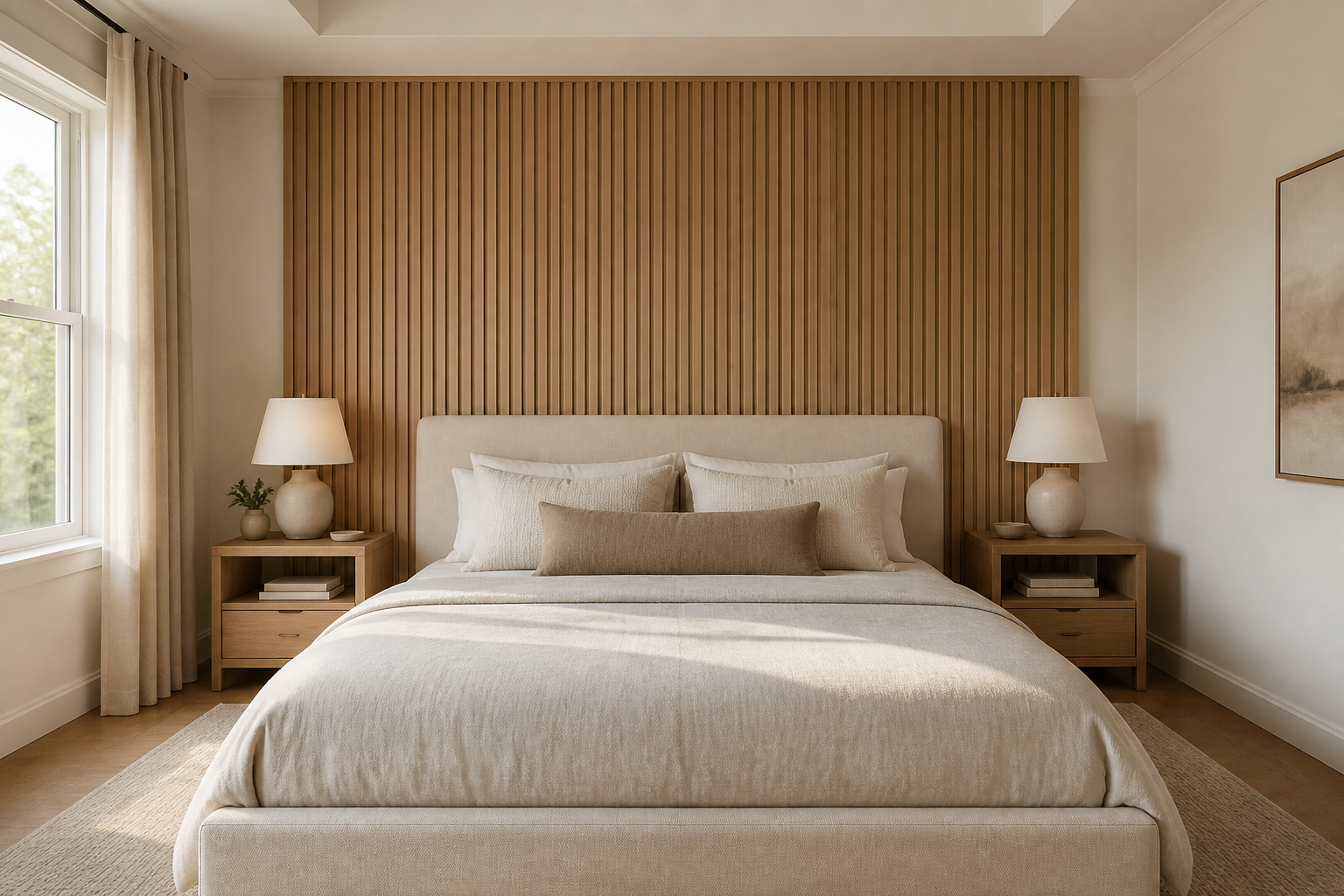
The wall behind the bed is usually the most natural focal point.
Board and batten can visually frame the headboard, while vertical slats emphasize ceiling height. Limewash creates a softer effect with less architectural structure.
In smaller bedrooms, a monochromatic design often works better than a high-contrast pattern. Painting the wall and trim the same color adds depth without visually dividing the room.
Board and batten can visually frame the headboard, while vertical slats emphasize ceiling height. Limewash creates a softer effect with less architectural structure.
In smaller bedrooms, a monochromatic design often works better than a high-contrast pattern. Painting the wall and trim the same color adds depth without visually dividing the room.
Accent Walls for Dining Rooms
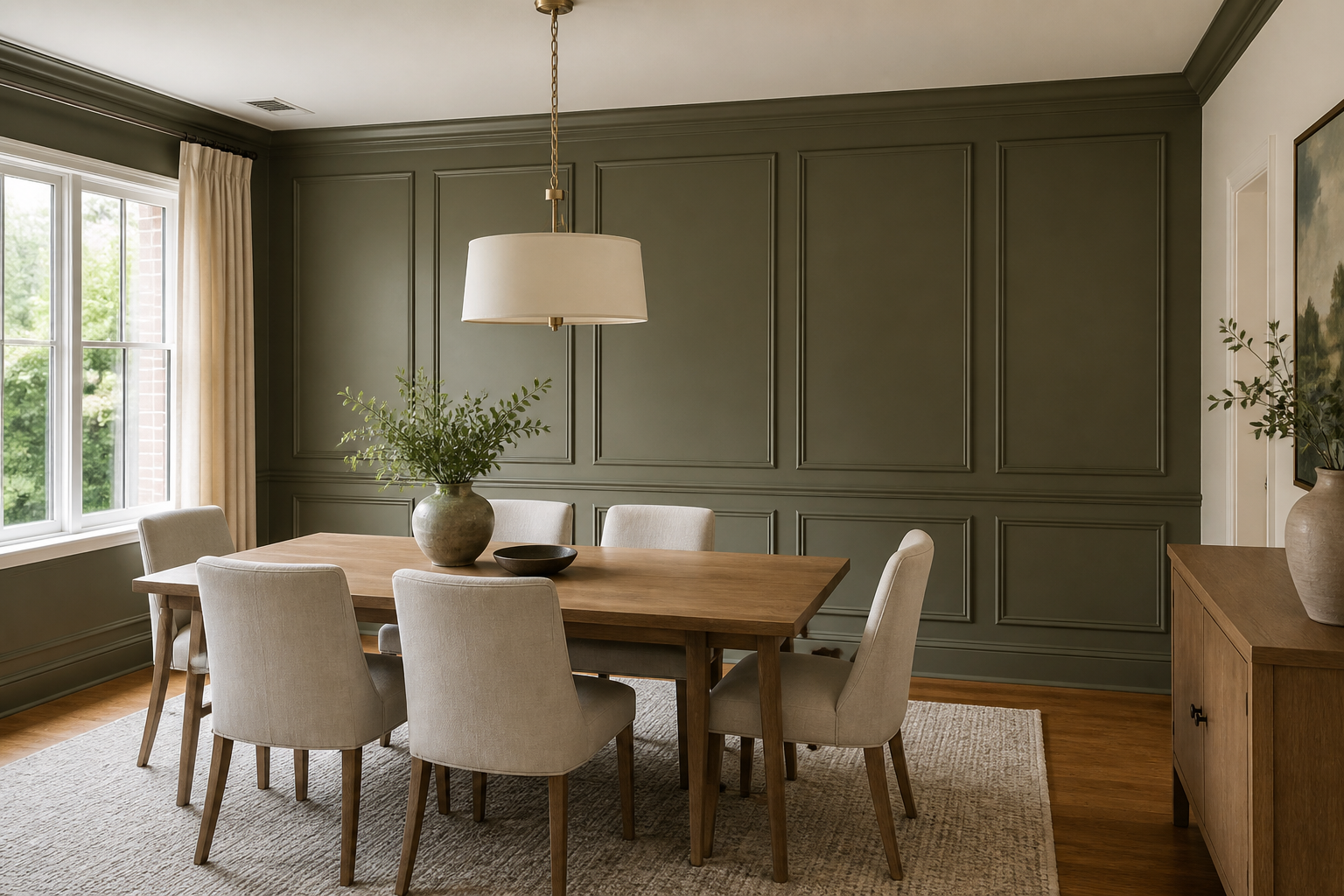
Dining rooms work particularly well with picture-frame molding and traditional board and batten.
These treatments add architectural character without competing with the dining table, lighting fixture, or artwork. A deeper wall color can create a more intimate atmosphere, while warm neutrals keep the room flexible.
Molding can cover one focal wall or continue around the entire room for a more formal appearance.
These treatments add architectural character without competing with the dining table, lighting fixture, or artwork. A deeper wall color can create a more intimate atmosphere, while warm neutrals keep the room flexible.
Molding can cover one focal wall or continue around the entire room for a more formal appearance.
Accent Walls for Home Offices
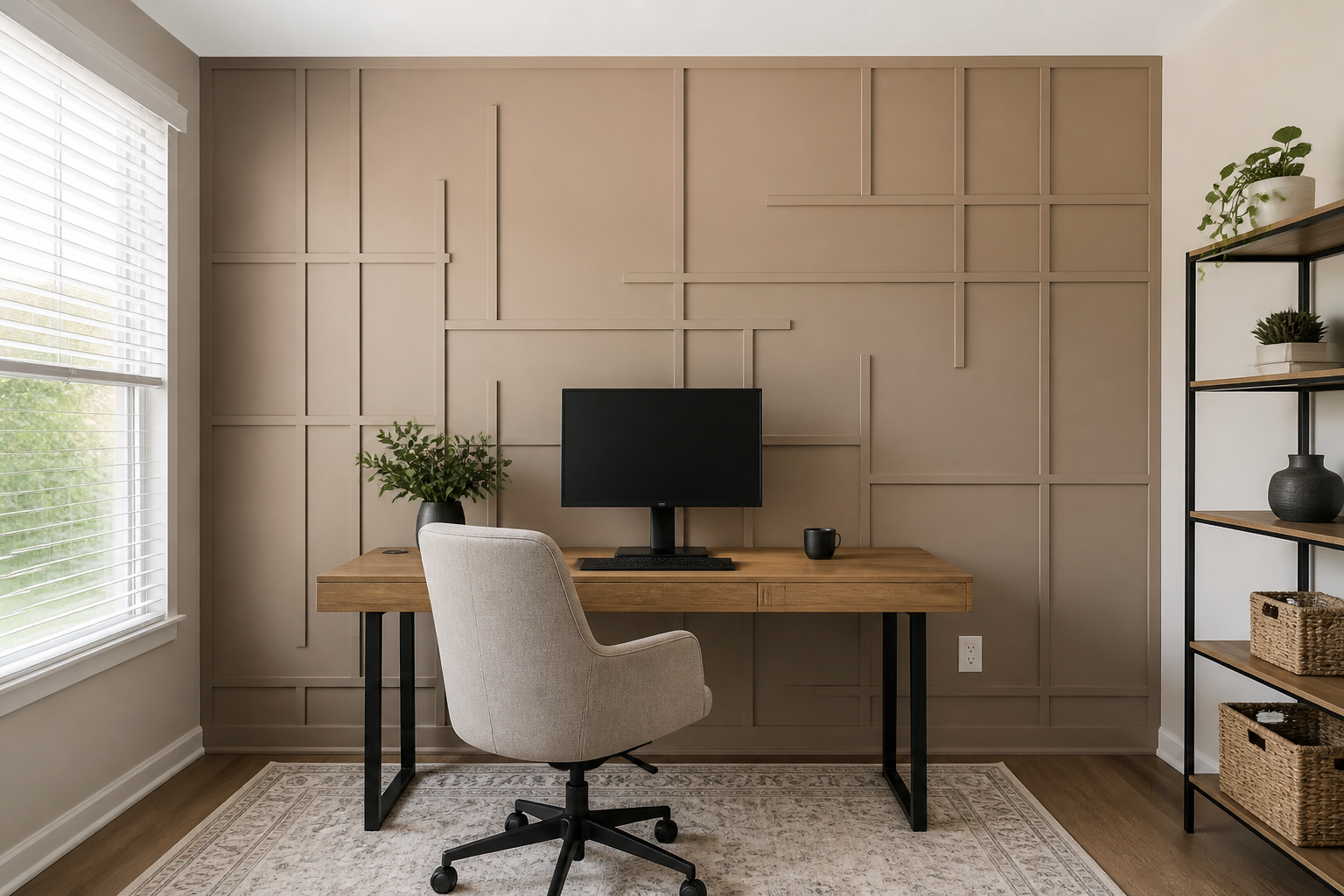
A home-office accent wall can provide a clean background for a desk, shelving, or video calls.
Geometric trim creates visual interest, while wood slats introduce warmth and a modern professional appearance. Darker colors can work well when the room has sufficient natural or artificial light.
The design should account for monitors, furniture, outlets, and shelving before the trim layout is finalized.
Geometric trim creates visual interest, while wood slats introduce warmth and a modern professional appearance. Darker colors can work well when the room has sufficient natural or artificial light.
The design should account for monitors, furniture, outlets, and shelving before the trim layout is finalized.
Accent Walls for Entryways and Hallways
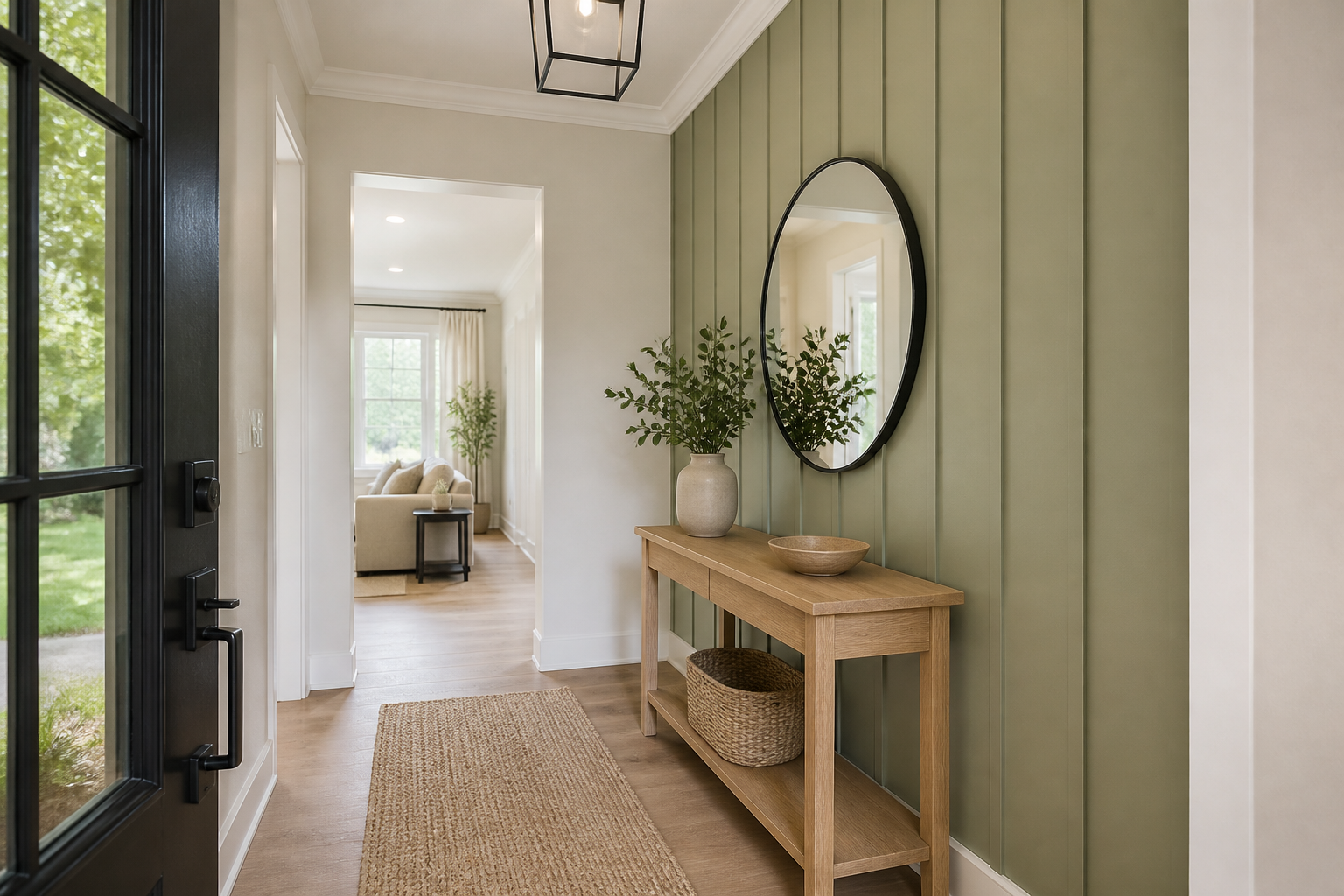
Entryways benefit from strong vertical elements that draw the eye into the home.
Vertical board and batten or wood slats can emphasize height without requiring much floor space. Hallways generally need simpler patterns because they are viewed from close range.
Existing doors, windows, switches, and openings should be incorporated into the layout rather than treated as interruptions.
Vertical board and batten or wood slats can emphasize height without requiring much floor space. Hallways generally need simpler patterns because they are viewed from close range.
Existing doors, windows, switches, and openings should be incorporated into the layout rather than treated as interruptions.
Accent Walls for Staircases
Staircase walls offer height and visibility but require careful planning around changing angles.
Picture-frame molding can follow the stair line, while vertical battens create a taller architectural effect. Custom geometric trim works well when the pattern is developed specifically for the wall rather than applied as a standard repeating grid.
Picture-frame molding can follow the stair line, while vertical battens create a taller architectural effect. Custom geometric trim works well when the pattern is developed specifically for the wall rather than applied as a standard repeating grid.
How to Choose the Right Accent Wall
Before selecting a style, consider:
Not every room needs an accent wall. One carefully chosen feature can be more effective than several competing treatments throughout the same visual area.
- Which wall is visible when entering the room
- Whether furniture will cover the design
- The number of windows, doors, outlets, and switches
- Ceiling height and overall wall proportions
- Natural and artificial lighting
- Existing flooring, cabinetry, trim, and furniture
- The amount of texture and contrast already in the room
- Maintenance requirements
- Available project investment
Not every room needs an accent wall. One carefully chosen feature can be more effective than several competing treatments throughout the same visual area.
How Accent-Wall Type Affects Cost
Project cost depends on wall size, preparation, trim complexity, materials, finish, ceiling height, and the number of architectural obstacles.
A painted feature wall generally requires less labor than a custom geometric pattern. Natural wood slats and specialty decorative finishes typically require more material or installation time. Tall walls, staircases, windows, and complicated layouts can also increase the scope.
Review our typical accent wall project pricing to understand how design choices affect the overall investment.
A painted feature wall generally requires less labor than a custom geometric pattern. Natural wood slats and specialty decorative finishes typically require more material or installation time. Tall walls, staircases, windows, and complicated layouts can also increase the scope.
Review our typical accent wall project pricing to understand how design choices affect the overall investment.
Find Inspiration in Completed Projects
Reference images can help identify preferred colors and styles, but every design should be adapted to the room’s actual dimensions.
Browse our completed custom wall projects in Atlanta to compare board and batten, geometric trim, wood details, decorative finishes, media walls, and fireplace features.
Browse our completed custom wall projects in Atlanta to compare board and batten, geometric trim, wood details, decorative finishes, media walls, and fireplace features.
Start Planning Your Accent Wall
A successful accent wall should feel connected to the room rather than added as an isolated decoration. Its scale, color, material, and pattern should support the existing architecture and the way the space is used.
Ready to explore options for your home? Request a custom accent wall quote.
Get a Project Quote
Explore Accent Wall Services
Ready to explore options for your home? Request a custom accent wall quote.
Get a Project Quote
Explore Accent Wall Services